Guillotine Blades: Material, Geometry, and the Secrets of Flawless Cutting in Printing and Packaging
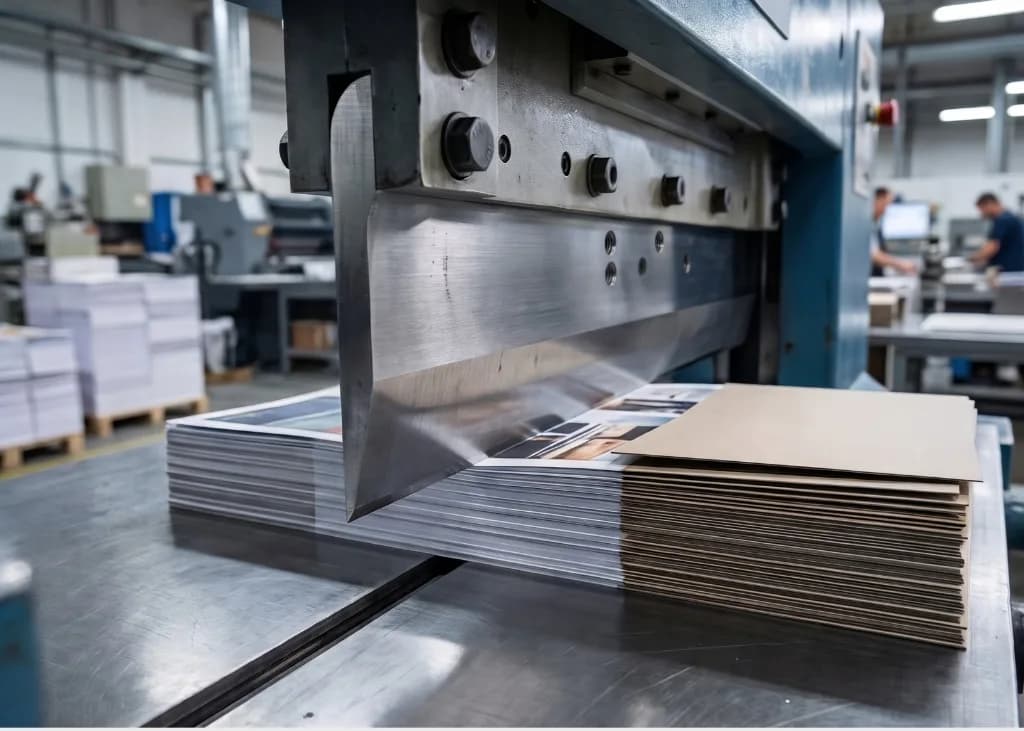
In industrial production processes, especially in the printing and packaging sectors, one of the most critical stages determining the quality of the final product is the cutting process. Whether a brochure comes off the production line with flawless edges or a thick cardboard package separates smoothly exactly at its dimensions depends directly on the cutting tools used, particularly industrial guillotine blades.
The difference between a standard cut and a flawless cut in high-capacity printing machines or demanding packaging lines is not just about the sharpness of the blade. The real engineering secret lies in selecting the right blade material, surface treatment technologies, and determining the most suitable blade geometry (bevel angle) for the material being cut.
To increase production efficiency and minimize downtime, businesses must delve into the technical details of their cutting tools.
Material Technology in Guillotine Blades: Which Alloy to Choose and Why?
Industrial guillotine blades are subjected to immense pressure and continuous friction during operation. Therefore, the balance between the toughness (resistance to breakage) and hardness (resistance to wear) of the steel used in production must be perfect. Depending on the structure of the material to be cut, the three main types of materials most preferred in the sector are:
- 1. Standard Tool Steel: Preferred for low-volume productions and soft paper types, standard tool steels offer a fundamental solution in terms of price/performance. The sharpening process is easy, and its toughness is high. However, it tends to dull quickly in high-volume jobs and abrasive materials.
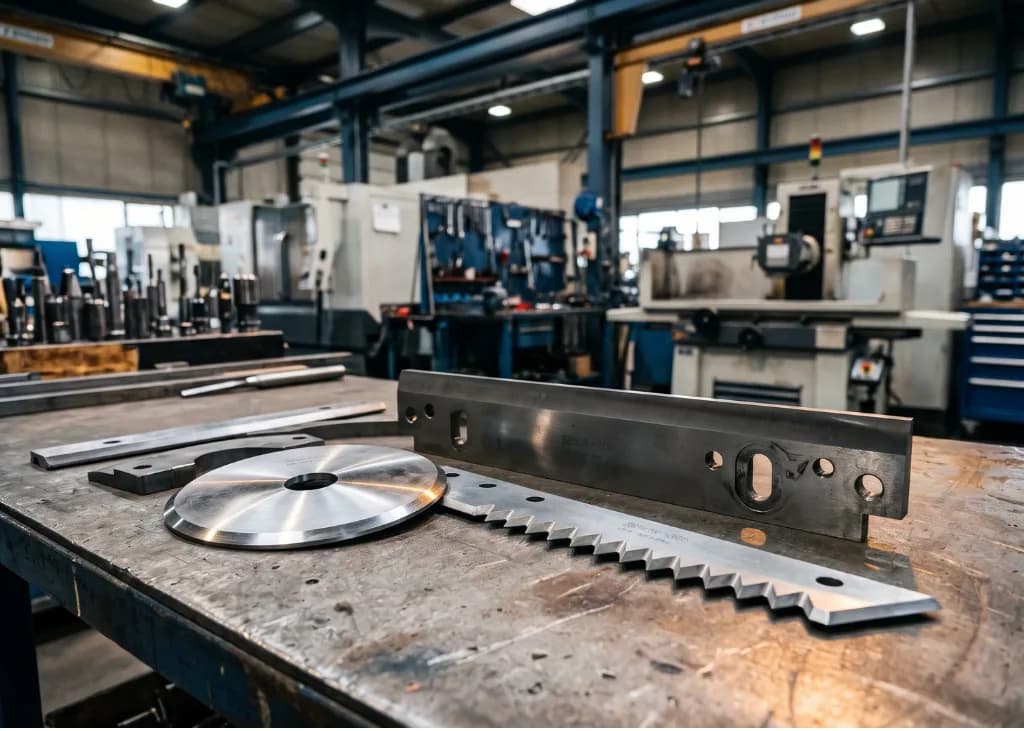
- 2. High Speed Steel (HSS): It is one of the most widely used alloys in the printing sector. Thanks to the high proportion of tungsten and molybdenum it contains, its wear resistance is quite high compared to tool steel. HSS paper cutting machine knives maintain their sharpness for a long time in standard paper cuts and provide an ideal balance for printing houses with intensive shifts. By using HSS only on the cutting edge of the blade (inlay technology), the flexibility of the body is preserved while the wear resistance of the tip is maximized.
- 3. Tungsten Carbide Tipped (TCT): In the packaging industry, Tungsten Carbide tipped blades come into play, especially in the cutting of heavy cardboard, recycled materials (which are highly abrasive due to the ash, sand, and recycling residues they contain), and plastic-based materials. Carbide blades maintain their sharpness for much longer compared to HSS blades, significantly reducing the frequency of blade replacement for businesses and, consequently, downtime. Since carbide is an extremely hard material, it is sensitive to chipping; therefore, supporting it with the right blade geometry is a critical necessity for packaging industry cutting tools.
The Impact of Blade Geometry and Bevel Angles on Cutting
Choosing the right material is only half the equation. The selected steel or carbide must be sharpened with the most appropriate geometry for the material to be cut (paper, corrugated cardboard, foil, etc.). In guillotine blades, the "bevel angle" directly affects the cutting quality.
- Narrow Angle Blades (e.g., 20° - 22°): Ideal for cutting soft and low-grammage papers. It easily penetrates the material, reducing cutting resistance. However, due to its thin structure, it can easily dull or chip at the tip on hard or thick packaging materials.
- Wide Angle Blades (e.g., 24° - 26°): Used in the cutting of hard cardboards, dense packaging materials, and label papers. The blade tip is thicker, making it much more resistant to pressure and wear.
- Double Bevel (Micro Angle) Geometry: It is one of the most advanced technologies in printing and packaging blades. A much smaller and steeper second angle (e.g., 26° - 0.5 mm thick) is applied to the very tip of the blade's main bevel angle (e.g., 22°). This "micro angle" allows the main body of the blade to advance easily within the material while increasing the strength of the cutting edge that receives the most impact, preventing breakage and premature dulling.
Flawless Production with the Right Choice
The main goal of businesses in choosing a guillotine blade is to achieve a burr-free, dust-free, and clean cut while prolonging the time between two sharpenings (the life of the blade) as much as possible.
As Snijer, with our deep engineering knowledge in industrial cutting tools, we produce high-tech blades specifically for the demanding production lines of the printing and packaging sectors. To find the most accurate and professional solutions for your business's cutting tool needs and to get detailed information about our products, please contact our expert team through our website.
Frequently Asked Questions (FAQ)
What is the advantage of using a double bevel (micro angle) on guillotine blades?
Double bevel geometry provides extra durability to the tip of the blade. While the main angle provides a comfortable glide inside the material, the micro angle applied to the tip prevents the blade edge from breaking or dulling quickly during the cutting of hard materials.
Which blade material should be preferred for cutting recycled paper?
Recycled papers wear out the blade very quickly due to the chemicals, staple residues, ash, and other hard particles they contain. For the cutting of such highly corrosive and abrasive materials, Tungsten Carbide (TCT) tipped guillotine blades, which have the highest wear resistance, should be preferred.
What is the main difference between HSS and Carbide blades?
HSS blades have high toughness (flexibility) and are resistant to impacts; they perform excellently in standard printing jobs. Carbide blades, on the other hand, are much harder than HSS, and their wear resistance is enormous, but they are more fragile. When used with the right material and machine, carbide blades can operate for much longer without being sharpened compared to HSS blades.