

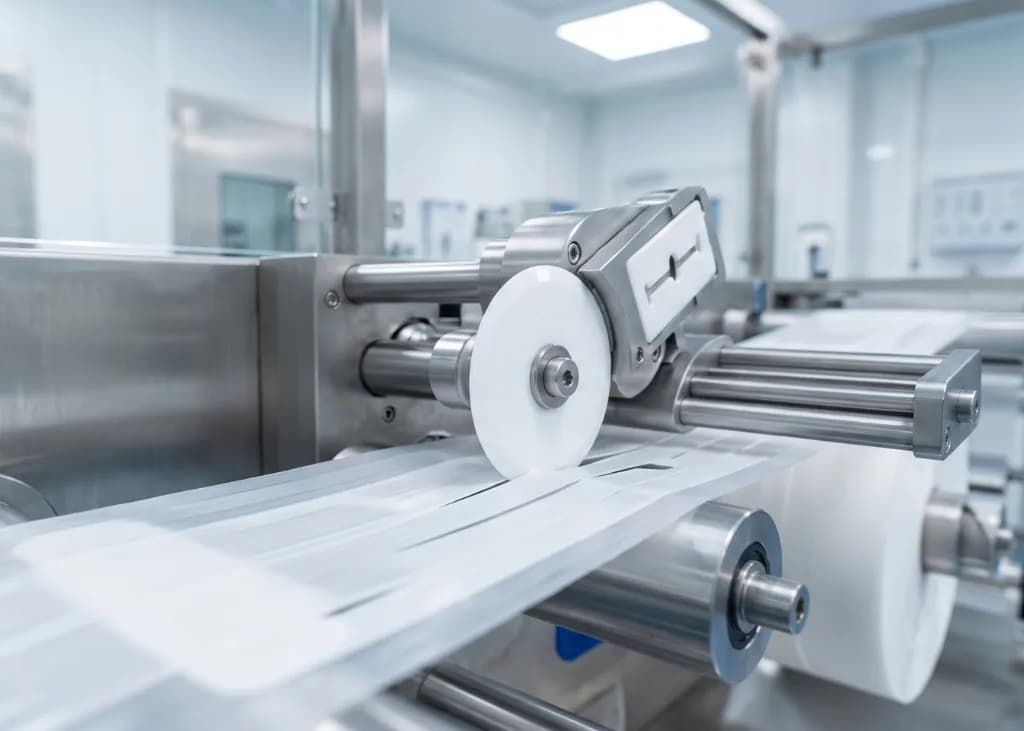
Industrial Zirconia Ceramic Blades: Applications, Advantages, and Cutting Performance
For manufacturing lines requiring continuous uptime, micron-level precision, and minimal tool wear, Zirconia (ZrO₂ – Zirconium Dioxide) ceramic blades offer an advanced engineering alternative to traditional tool steels and tungsten carbide. Manufactured primarily from Yttria-Stabilized Tetragonal Zirconia Polycrystal (Y-TZP), these high-performance cutting tools combine diamond-like hardness, chemical inertness, and extreme wear resistance to meet the demanding requirements of modern converting and slitting operations.
What Are Zirconia Ceramic Blades?
Zirconia ceramic blades are non-metallic industrial cutters produced by sintering zirconium dioxide powder under extreme pressure and temperature. Reaching 1200–1500 HV on the Vickers hardness scale, Y-TZP ceramic maintains its cutting edge 5 to 20 times longer than standard carbon or high-speed tool steels.
- Micro-Scale Edge Retention: High resistance to abrasive edge breakdown prevents burr formation and edge chipping.
- Non-Magnetic & Electrically Insulating: Eliminates static build-up, will not spark, and operates safely in sensitive electronic environments.
- Chemical & Corrosion Resistance: Completely inert to acids, alkalis, and industrial solvents, eliminating oxidation and rust.
- Low Coefficient of Friction: Generates significantly less frictional heat during high-speed web slitting, preventing heat-induced polymer melting along cut edges.
Key Industrial Application Areas
Zirconia ceramic blades are engineered for processes involving abrasive substrates, corrosive media, and cleanroom environments where machine downtime is cost-prohibitive.
1. Lithium-Ion Battery Manufacturing (Electrode & Separator Slitting)
In electric vehicle (EV) battery cell production, slitting anode/cathode foils and polymer separator films requires ultra-clean cut paths. Metal blades introduce the risk of conductive microscopic burrs, which can puncture separators and cause battery short-circuits. Zirconia ceramic blades eliminate conductive metal particulate contamination entirely, provide burr-free slitting at high web speeds, and comply with strict cleanroom class standards for cell safety.
2. Technical Textiles, Aramid, and High-Modulus Fibers
Structural fibers such as Kevlar®, Nomex®, Dyneema®, carbon fiber, and fiberglass rapidly dull conventional steel cutters. Zirconia ceramic blades deliver superior toughness against severe abrasive wear, prevent yarn fraying or filament crushing, and reduce blade changeover downtime on rewinding and weaving equipment by up to 80%.
3. Multi-Layer Plastic Film, Foil, and Flexible Packaging Converting
High-speed slitting of BOPP, PET, CPP, stretch film, and multi-layer barrier laminates often causes edge-welding due to frictional heat. Zirconia’s smooth surface topography reduces friction, preventing melted polymer build-up on the blade edge and delivering continuous slit-edge consistency over hundreds of thousands of meters.
4. Medical Device and Diagnostic Strip Converting
In the converting of biocompatible tapes, transdermal patches, biosensor test strips, and surgical components, Zirconia releases zero metal ions, ensuring full biocompatibility. It resists repeated autoclaving, gamma radiation, and chemical sterilization protocols without material degradation.
5. Magnetic Media, Flexible Circuits, and Semiconductors
When slitting copper-clad laminates, flexible printed circuits (FPCs), and magnetic tapes, the cutting tool must not induce magnetic interference. Zirconia’s non-magnetic and dielectric nature safeguards microelectronic components against electrostatic discharge (ESD) and magnetic contamination.
Performance Comparison: Zirconia Ceramic vs. Tool Steel vs. Tungsten Carbide
| Evaluation Criteria | Tool Steel (D2, M2) | Tungsten Carbide (WC) | Zirconia Ceramic (Y-TZP) |
|---|---|---|---|
| Wear Resistance | Standard | High | Ultra-High (5–20x) |
| Corrosion & Acid Resistance | Low | Moderate | Superior (Completely Inert) |
| Magnetic Interference | Magnetic | Magnetic / Semi-Magnetic | 100% Non-Magnetic |
| Cleanroom Safety | Low (Risk of metal flakes) | Moderate | Maximum Grade |
| Frictional Heat | High | Moderate | Very Low |
| Blade Replacement Frequency | Frequent | Moderate | Minimal |
ROI and Downtime Optimization in Continuous Production
Evaluating industrial cutting tools based solely on purchase price obscures the true metric: Total Cost of Ownership (TCO). Lower-cost steel blades quickly generate hidden expenses through production stoppages, setup labor, off-spec scrap rates, and re-sharpening logistics. In continuous slitting lines, transitioning to Zirconia ceramic blades extends replacement cycles from days to months, driving a measurable increase in Overall Equipment Effectiveness (OEE).
Custom Engineered Zirconia Blades by Snijer
Slitting operations differ by material thickness, line speed, and blade holder geometry. Snijer supplies both standard replacement geometries and custom designs manufactured to precise engineering drawings or physical samples.
To evaluate technical ceramic solutions for your specific production line or to request custom prototypes, please contact the Snijer engineering team directly.
Frequently Asked Questions
Are zirconia ceramic blades brittle?
Unlike household porcelain ceramics, industrial Y-TZP utilizes Yttria-stabilized transformation toughening. This microstructure absorbs high tensile stresses during cutting. While engineered to handle continuous slitting, they should be isolated from blunt mechanical shock or metal-to-metal contact.
Is retrofitting required to install ceramic blades on existing equipment?
No. Snijer manufactures ceramic blades to exact standard OEM dimensions and thicknesses, fitting seamlessly into standard blade holders without machine modifications.